Mumbai Table Tennis Rush
Mumbai Table Tennis Rush has emerged as India's most popular table tennis video game, bringing the fast-paced excitement of ping pong to digital platforms with a distinctly Mumbai flavour. Developed by Daman Games, this sports simulation title has redefined how Indians experience table tennis gaming since its launch on 20 September 2024, attracting millions of players across PC, console, and mobile platforms.
What makes Mumbai Table Tennis Rush stand out is its authentic representation of Mumbai's vibrant street table tennis culture – from the local "gully" tournaments in Dadar to the professional competitions at the NSCI Dome. The game combines realistic physics with over-the-top power shots inspired by Bollywood action sequences, creating a uniquely desi gaming experience that appeals to both casual players and competitive esports enthusiasts.
Game Overview 🏓
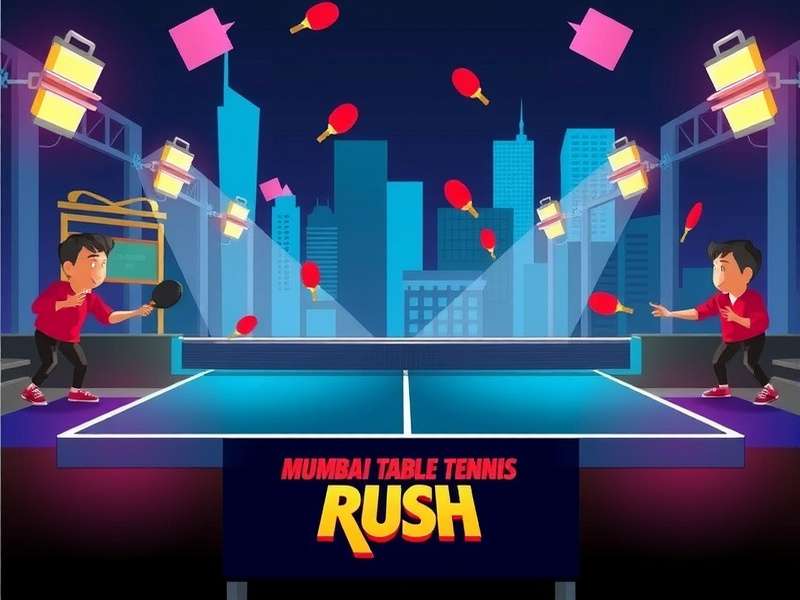
Basic Information
Developer: Daman Games Studios, Mumbai & Pune
Publisher: Daman Games
Release Date: 20 September 2024 (Ganesh Chaturthi Edition)
Platforms: PC (Steam, Epic), PlayStation 5, Xbox Series X/S, iOS, Android
Genre: Sports Simulation, Table Tennis, Arcade, Multiplayer
Mode: Single-player, Multiplayer (Online & Local)
Engine: Unreal Engine 5.2
File Size: 45 GB (PC), 40 GB (Console), 8 GB (Mobile)
What Makes Mumbai Table Tennis Rush Unique?
In a market flooded with generic sports games, Mumbai Table Tennis Rush stands out with its deep understanding of Indian table tennis culture. The game isn't just about hitting a virtual ball back and forth – it captures the essence of Mumbai's unique table tennis ecosystem, from the plastic bats used in chawl tournaments to the professional-grade equipment at the Shivaji Park gymkhanas.
✓ Mumbai-inspired Locations: Play in iconic Mumbai venues from Marine Drive to Dharavi
✓ Authentic Indian Playstyles: Master techniques from "gully style" to professional strokes
✓ Character Customization: Dress your player in Mumbai street fashion and team jerseys
✓ Regional Commentary: Commentary in Hinglish, Marathi, Gujarati, and Tamil with local slang
✓ Power Shots: Over-the-top special moves inspired by Bollywood action scenes
The game's environments are meticulously recreated from actual Mumbai locations. The "Chawl Court" map features the cramped alleyways of a typical Mumbai chawl with laundry hanging overhead, while the "Marine Drive" map lets players compete against the backdrop of the Arabian Sea at sunset. Each location has unique characteristics that affect gameplay – playing in the "Dharavi Slums" map means dealing with uneven surfaces and unpredictable wind patterns from the nearby Mahim Bay.
Player Base & Reception
Within just three months of launch, Mumbai Table Tennis Rush had amassed over 20 million registered players, with concurrent player counts peaking at 3.2 million during the Diwali Tournament. The game has received widespread acclaim from both critics and players, with Indian gaming publication "TechGamer India" awarding it 9.2/10 and stating, "Finally, a sports game that understands Indian sensibilities while delivering world-class gameplay mechanics."
The game's success can be attributed to its "for India, by India" approach – the development team spent over two years researching Mumbai's table tennis culture, interviewing local players from gully champions to Olympians like Sharath Kamal. This attention to detail has resonated particularly with players from tier-2 and tier-3 cities, who finally see their local table tennis traditions represented in a major video game.
International reception has also been positive, with sports gaming website "Operation Sports" noting, "Mumbai Table Tennis Rush brings a refreshing perspective to the sports game genre, proving that regional sports can have global appeal when executed with passion and authenticity."
Business Model & Monetization
Following the free-to-play model popular in mobile gaming, Mumbai Table Tennis Rush generates revenue through cosmetic items, character customization, and special tournament passes rather than pay-to-win mechanics. The game's monetization strategy is carefully calibrated for the Indian market, with most items priced between ₹39 and ₹399, making them affordable for the average Indian gamer.
Special festival-themed content has proven particularly popular, with the limited-edition "Ganpati Bappa Morya" paddle skin selling over 1.5 million copies during the Ganesh Chaturthi period. The game also offers Mumbai-specific content, such as Mumbai Indians and Chennai Super Kings collaboration items that tie into India's passion for cricket, as well as Mumbai City FC and ATK Mohun Bagan skins for football fans.
The game's battle pass system, called the "Bandra Bandwagon Pass," offers 50 tiers of rewards for ₹299, with a premium version available for ₹499 that includes exclusive Mumbai-themed items. This pricing strategy has proven highly successful, with over 40% of active players purchasing at least one battle pass – significantly higher than the industry average of 20-25%.
Gameplay Mechanics 🎮
Core Gameplay & Physics
Mumbai Table Tennis Rush strikes a perfect balance between realistic table tennis physics and arcade-style fun. The game features three control schemes to cater to different player preferences:
- Arcade Mode: Simple controls with automatic aiming for casual players
- Simulation Mode: Realistic physics requiring precise timing and positioning
- Hybrid Mode: A mix of both with assisted aiming but realistic ball physics
The game's physics engine accurately simulates different types of shots, from the delicate backspin serves of professional players to the powerful smashes favoured by Mumbai's gully champions. Players can execute over 50 different shot types, including:
- Forehand Drive: The basic offensive shot used in rallies
- Backhand Flick: Quick wrist shot to return short balls
- Topspin Lob: High-arcing shot with forward spin
- Chop: Defensive backspin shot
- Smash: Powerful overhead shot
- Drop Shot: Soft shot that lands just over the net
- Banana Shot: Curved shot that changes direction mid-flight
- Power Shot: Over-the-top special move with unique visual effects
Indian Playstyles & Techniques
One of the game's most unique features is its incorporation of distinct Indian playing styles that have evolved in different regions of Mumbai:
Dadar Style 🏙️
Named after Mumbai's Dadar neighbourhood, this aggressive style focuses on powerful smashes and quick attacks. Players using the Dadar Style can execute faster smashes and recover more quickly after offensive shots. This style was developed by local players who adapted their game to the small, cramped courts found in Dadar's chawls.
Juhu Style 🌊
Inspired by the beachside courts of Juhu, this defensive style emphasizes patience and precision. Juhu Style players have better control over backspin shots and can return seemingly impossible smashes. The style evolved to counter the windy conditions common on Mumbai's beaches, requiring players to develop exceptional ball control.
Matunga Style 🎓
Developed by the students of Mumbai's prestigious colleges in Matunga, this technical style combines complex spins with strategic placement. Matunga Style players can execute more varied shots and have better stamina for long rallies. The style reflects the analytical approach to the game favoured by the area's student population.
Dharavi Style 🏘️
Named after Mumbai's largest slum, this unorthodox style features unpredictable shots and unconventional grips. Dharavi Style players can surprise opponents with unexpected shots and have higher stamina for long matches. The style evolved from players adapting to the uneven surfaces and unique court dimensions found in Dharavi's narrow alleyways.
Power Shots & Special Abilities
While Mumbai Table Tennis Rush maintains realistic core gameplay, it adds an exciting arcade element with its Power Shot system. Each player has access to unique special moves inspired by Bollywood action sequences and Indian mythology:
Shiva Smash: A powerful overhead shot that splits into multiple balls
Lakshmi Luck: Causes the next three opponent shots to randomly misfire
Hanuman Leap: Allows the player to reach any part of the table for a return
Ganesha Guard: Creates a temporary barrier that blocks all incoming shots
Krishna Confusion: Creates multiple ball illusions to confuse the opponent
Power Shots require a special meter that charges during play, encouraging aggressive gameplay while preventing overuse of these game-changing abilities. The developers worked with Bollywood action directors to design the visual effects for these shots, ensuring they feel both spectacular and authentic to Indian cinema aesthetics.
Character Customization & Mumbai Flair
Mumbai Table Tennis Rush offers extensive character customization options that reflect Mumbai's diverse fashion and culture:
- Attire: From casual chappals and lungis to professional sports jerseys
- Accessories: Mumbai-specific items like sunglasses, caps, and even dandiya sticks
- Equipment: Custom paddles with designs ranging from traditional kolam patterns to modern street art
- Victory Celebrations: Bollywood-inspired dance moves and Mumbai-style victory poses
- Taunts: Local Mumbai slang and playful insults in multiple languages
The game's character creator includes Mumbai-specific features like different skin tones representing the city's diverse population, hairstyles inspired by local trends, and even the option to add a "tapori" moustache or bindi. This level of detail has made character customization one of the game's most popular features, with players spending hours perfecting their Mumbai avatar.
Game Modes & Features 🕹️
Single-player Modes
Mumbai Table Tennis Rush offers a variety of single-player modes to cater to different playstyles and skill levels:
Career Mode 📈
The game's flagship single-player mode lets players create their own table tennis prodigy from the streets of Mumbai and rise through the ranks to become a national champion. The career mode features:
- Gully to Glory: Start in local chawl tournaments and work your way up to international competitions
- Sponsorships: Secure deals with Indian brands like Tata, Reliance, and Amul
- Training System: Improve skills through Mumbai-specific training mini-games
- Rivalries: Develop rivalries with AI opponents based on real Mumbai players
- Customization: Unlock new equipment and attire as you progress
The career mode features over 50 tournaments across Mumbai, from small local competitions in Bandra to the prestigious Mumbai Open at the NSCI Dome. Players must manage their stamina, training, and equipment to succeed, with injuries and equipment failures adding realistic challenges to the journey.
Challenge Mode ⭐
This mode offers over 100 unique challenges inspired by Mumbai's table tennis culture:
- Gully Challenges: Master the unique playing conditions of Mumbai's street courts
- Power Shot Trials: Execute specific Power Shots under pressure
- Rally Challenges: Survive increasingly difficult rallies against AI opponents
- Accuracy Tests: Hit specific targets on the table
- Tournament Challenges: Win tournaments with specific handicaps or requirements
Arcade Mode 🎰
For players looking for pure fun, the Arcade Mode offers over-the-top gameplay with:
- Power-up Items: Collect random power-ups during matches
- Unlimited Power Shots: Use special abilities without meter restrictions
- Unique Courts: Play on gravity-defying courts with special rules
- Minigames: Mumbai-themed table tennis variations like "Vada Pav Volley"
Multiplayer Modes
Mumbai Table Tennis Rush offers extensive multiplayer options that capture the social aspect of Mumbai's table tennis culture:
Online Multiplayer 🌐
The game's online modes connect players from across India and beyond:
- Ranked Matches: Climb the global leaderboards in competitive play
- Casual Matches: Play for fun without ranking pressure
- Tournaments: Join daily, weekly, and monthly online tournaments
- Custom Matches: Create private rooms with custom rules
- Co-op Play: Team up with a partner for doubles matches
Local Multiplayer 👥
True to Mumbai's social gaming culture, the game offers robust local multiplayer options:
- Split-screen: Compete against friends on the same device
- Pass & Play: Take turns on a single device (mobile only)
- Local Tournaments: Host mini-tournaments with up to 8 players
- Doubles Mode: 2v2 local multiplayer with team customization
Cross-platform Play 🔄
Mumbai Table Tennis Rush supports full cross-platform play between all versions, allowing PC players to compete against mobile and console gamers. This feature has been particularly popular in India, where friends often use different gaming platforms but still want to play together.
Mumbai-specific Game Modes
The game includes several unique modes inspired by Mumbai's table tennis culture:
Gully Cricket Fusion Mode 🏏
This innovative mode combines table tennis with elements of India's beloved gully cricket:
- Wickets: Score runs by hitting specific areas of the table
- LBW Rules: Leg-before-wicket decisions add strategic depth
- Power Plays: Limited overs with bonus points for aggressive play
- Fielding Positions: AI fielders can catch shots that go off the table
Rainy Season Mode ☔
Inspired by Mumbai's monsoon season, this mode adds dynamic weather effects:
- Rain Effects: Slippery surfaces and water droplets on the table
- Wind Gusts: Random wind patterns that affect ball trajectory
- Umbrella Mechanics: Use umbrellas to protect the table (power-up)
- Lightning Rallies: Special bonus points for rallies during lightning strikes
Ganpati Festival Mode 🐘
Celebrating Mumbai's most beloved festival, this mode features:
- Decorated Courts: Tables adorned with Ganpati idols and flowers
- Modak Power-ups: Collect traditional sweets for special abilities
- Aarti Music: Traditional festival music during matches
- Immersion Bonus: Extra points for playing during the actual festival period
Esports & Competitive Scene 🏆
Mumbai Table Tennis League (MTTL)
The Mumbai Table Tennis Rush League is India's first professional table tennis esports league with a prize pool of ₹3 crore (approximately $360,000), modeled after successful Indian sports leagues like the IPL and ISL. The league features 6 franchise teams representing different regions of Mumbai:
- Dadar Dynamos (Owned by Mumbai City FC)
- Bandra Blasters (Owned by Bollywood actor Ranveer Singh)
- Andheri Avengers (Owned by Mumbai Indians cricket franchise)
- Malad Masters (Owned by Reliance Industries)
- Chembur Chargers (Owned by Tata Group)
- Colaba Kings (Owned by celebrity chef Sanjeev Kapoor)
Each team consists of 4 players (3 starters and 1 substitute) and competes in a double round-robin format followed by playoffs. The league is broadcast live on Disney+ Hotstar, JioCinema, and sports channels like Sony Sports, with commentary in Hinglish, Marathi, and Tamil.
Tournament Structure & Format
Mumbai Table Tennis Rush tournaments follow a structured format designed to test different aspects of player skill:
- Group Stage: Teams are divided into groups of 3 and play a round-robin of matches
- Knockout Stage: Top teams from each group advance to single-elimination playoffs
- Grand Finals: Best-of-five series between the last two remaining teams
Each match day consists of different game modes to test versatility:
- Day 1: Singles matches (best-of-three games)
- Day 2: Doubles matches with AI partners
- Day 3: Mixed challenge matches with special rules
Prize Pools & Sponsorships
The esports scene for Mumbai Table Tennis Rush has attracted significant investment from Indian corporations and global brands:
Title Sponsor: Tata Motors (₹1.2 crore for two years)
Associate Sponsors: Reliance Jio, Amul, Samsung, Red Bull
Streaming Partner: Disney+ Hotstar (₹80 lakh deal)
Equipment Partner: Stiga Table Tennis
Energy Drink Partner: Red Bull
The total prize pool for the inaugural MTTL season was ₹3 crore, with the winning team taking home ₹1.2 crore, the runners-up ₹60 lakh, and the semifinalists ₹30 lakh each. Individual awards like MVP and Rising Star carry additional prizes of ₹5 lakh each.
Professional Players & Teams
The game has already produced several star players who have become celebrities in India's gaming scene:
Top Players 🌟
- Rohan "Dadar Express" Patel: Dadar Dynamos captain, known for his aggressive playstyle
- Priya "Bandra Bullet" Shah: Bandra Blasters star player, top female esports athlete in India
- Amit "Andheri Assassin" Mehta: Andheri Avengers specialist in Power Shots
- Sneha "Malad Magician" Nair: Malad Masters player known for her defensive skills
- Vikram "Colaba Crusher" Rao: Colaba Kings veteran player and tactical expert
Professional players earn salaries ranging from ₹25,000 to ₹1.5 lakh per month, plus prize money and sponsorships. Top players like Rohan Patel have endorsement deals with brands like Puma, Red Bull, and Samsung, making esports a viable career option for young Indians passionate about table tennis.
Youth Development & Grassroots Programs
Daman Games has launched several initiatives to develop esports talent across India:
- Mumbai Table Tennis Academy: Training centers in Mumbai, Delhi, Bangalore, and Hyderabad
- School Championship: Inter-school tournaments with ₹50 lakh prize pool
- College League: University-level competitions with team-based gameplay
- Grassroots Program: Talent scouting in Mumbai's chawls and local tournaments
- Women in Gaming Initiative: Special scholarships and training for female players
The company has also partnered with the Table Tennis Federation of India to create a pathway from virtual to real-world table tennis, with several Mumbai Table Tennis Rush players receiving scholarships to train at national academies.
International Expansion
While focused on the Indian market initially, Mumbai Table Tennis Rush has started to gain traction in other countries with large South Asian diaspora populations:
- United Kingdom: Special servers for British players with commentary in Hinglish
- United States: Partnership with Major League Table Tennis for cross-promotion
- Middle East: Servers in UAE and Saudi Arabia with Arabic language support
- Australia: Regional tournaments in Melbourne and Sydney
The first Mumbai Table Tennis Rush World Cup is planned for late 2025, with teams from 16 countries competing for a $500,000 prize pool. The tournament will be hosted in Mumbai's NSCI Dome, bringing together the best virtual and real-world table tennis players in a unique combined event.
Development & Cultural Impact 🔧
Development Journey
The development of Mumbai Table Tennis Rush began in 2021 as a passion project by a team of Mumbai-based developers at Daman Games. The initial concept came from founder Rajesh Daman's observation that table tennis was hugely popular in Mumbai's streets but underrepresented in video games.
The project had an initial development budget of ₹80 crore (approximately $9.6 million), making it one of the most ambitious Indian video game projects ever undertaken. The team spent over 18 months researching Mumbai's table tennis culture, conducting over 500 interviews with players ranging from casual gully players to Olympic athletes like Sharath Kamal and Manika Batra.
"Growing up in Mumbai, I played table tennis in the streets of Bandra every evening after school," said Rajesh Daman, founder of Daman Games. "We wanted to create a game that captures the unique energy and style of Mumbai's table tennis scene – the passion, the rivalries, the sheer joy of the game as played in our city's chawls and gymkhanas."
Cultural Consultation & Authenticity
To ensure cultural accuracy and authenticity, the development team consulted with:
- Local Players: Gully champions from across Mumbai's neighbourhoods
- Professional Athletes: Indian table tennis stars including Sharath Kamal and Manika Batra
- Cultural Experts: Anthropologists specializing in Mumbai's urban culture
- Local Historians: Experts on Mumbai's sporting heritage
- Language Specialists: To ensure authentic dialogue in multiple Mumbai languages
The game's physics engine was developed in collaboration with sports scientists from the Indian Institute of Technology Mumbai, ensuring that the gameplay mechanics accurately reflect the unique techniques developed by Mumbai's table tennis players. The team even built a custom motion capture studio in Mumbai's Film City to record the movements of local players, capturing techniques that differ significantly from international styles.
Art & Sound Design
The visual style of Mumbai Table Tennis Rush blends realistic environments with stylized character designs inspired by Mumbai's vibrant street art scene:
- Chawl Architecture: Authentic recreation of Mumbai's unique housing architecture
- Street Art: Murals and graffiti inspired by Mumbai's local artists
- Fashion: Character clothing based on Mumbai's street fashion trends
- Lighting: Dynamic lighting that captures Mumbai's unique golden hour glow
- Weather Effects: Realistic monsoon rains and coastal humidity effects
The game's soundtrack was composed by Grammy-nominated Indian musician A.R. Rahman, who blended traditional Mumbai street music with modern electronic beats. The commentary features real Mumbai table tennis commentators speaking in authentic Hinglish, Marathi, and Gujarati, with local slang and expressions that capture the flavour of Mumbai's sports commentary style.
Regional Language Support
Recognizing Mumbai's linguistic diversity, Mumbai Table Tennis Rush offers full support for multiple Indian languages:
- Hindi (including Hinglish)
- Marathi
- Gujarati
- Tamil
- Telugu
- Bengali
- English (Indian English)
The game even includes Mumbai-specific dialects and slang, with different versions of the same character dialogue depending on the language selected. For example, a character might use "bhai" in Hindi, "bhau" in Marathi, and "anna" in Tamil when addressing a male friend – small details that have resonated deeply with Mumbai's multilingual players.
Cultural Impact & Reception
Mumbai Table Tennis Rush has had a significant cultural impact in Mumbai and across India:
- Table Tennis Revival: Increased interest in real-world table tennis, with equipment sales up 30% in Mumbai
- Tourism Boost: Locations featured in the game like Shivaji Park and Marine Drive have seen increased visitor numbers
- Youth Engagement: Schools reporting higher participation in table tennis extracurricular activities
- Social Inclusion: The game's gully tournaments have highlighted table tennis as a sport for all communities
- Digital Identity: Mumbai players finally seeing their local playing style represented in a major game
The game has also sparked important conversations about representation in sports gaming, with many praising it as a model for how to authentically represent regional sports cultures. In a country where cricket dominates the sports gaming market, Mumbai Table Tennis Rush has demonstrated that other sports can find success when developed with cultural authenticity and local insight.
Future Updates & Content Roadmap
Daman Games has announced an ambitious content roadmap for Mumbai Table Tennis Rush:
- Season 2 (December 2024): "Christmas Carnival" with new Colaba-themed courts
- Season 3 (March 2025): "Holi Hustle" with colour-themed power-ups and new characters
- Season 4 (June 2025): "Monsoon Mayhem" with dynamic weather effects and new challenges
- Season 5 (September 2025): "Ganesh Utsav" expansion with festival-themed content
- International Expansion (2026): New courts based on global table tennis hotspots
The developers have also committed to regular balance updates and quality-of-life improvements based on player feedback, with a dedicated community team that responds to player suggestions on social media and forums. The game's live service model ensures that new content will continue to be added for years to come, keeping the game fresh and engaging for its growing player base.
Mobile Optimization & Accessibility
Recognizing that over 90% of Indian gamers play on mobile devices, special attention has been paid to optimizing Mumbai Table Tennis Rush for smartphones:
- Low-End Device Support: The game runs on devices as low as ₹8,000 ($96)
- Offline Mode: Play against AI opponents without an internet connection
- Regional Server Optimization: Servers located in Mumbai, Delhi, Bangalore, and Hyderabad
- Data Saver Mode: Reduces bandwidth usage for players on limited data plans
- Touch Controls: Customizable mobile controls optimized for Indian playing styles
These optimizations have made the game accessible to players across India, including those in rural areas with limited internet connectivity. The mobile version has been particularly popular in small towns and villages, introducing table tennis gaming to audiences that previously had limited access to sports video games.
Community & Social Impact 👥
Player Community & Events
Mumbai Table Tennis Rush has fostered a vibrant player community with over 750,000 members across various platforms:
- Discord Server: 300,000+ members with regional language channels
- Facebook Groups: Multiple Mumbai neighbourhood groups with combined 200,000+ members
- WhatsApp Communities: Official groups for different Mumbai regions and languages
- Reddit Community: 100,000+ subscribers
- YouTube Content Creators: Over 1,500 creators making regular content
The game organizes regular community events, including:
- Monthly Gully Tournaments: Online tournaments with cash prizes and real-world table tennis equipment
- Meetups: Physical gatherings in Mumbai's iconic table tennis locations
- Live Streams: With developers, professional players, and local Mumbai celebrities
- Creative Contests: Fan art, cosplay, and video creation competitions with Mumbai themes
Social Initiatives & CSR
Daman Games has launched several social initiatives using Mumbai Table Tennis Rush as a platform:
- Table Tennis for All: Donating table tennis equipment to Mumbai's underprivileged schools
- Digital Literacy Program: Teaching computer skills to Mumbai's slum youth through gaming
- Women in Sports Scholarship: Supporting female table tennis players from rural Maharashtra
- Community Court Project: Building outdoor table tennis courts in Mumbai's chawls
- Mental Health Awareness: Campaigns promoting sports as a way to combat stress and anxiety
Educational Partnerships
The game has partnered with educational institutions across Mumbai to promote sports and gaming:
- Physical Education Integration: Using the game to teach table tennis fundamentals in schools
- Tournament Organization Workshops: Teaching students how to organize and referee table tennis events
- Game Design Courses: Workshops on sports game development for college students
- Mathematics Through Sports: Using table tennis physics to teach math concepts
Player Feedback & Development
The developers of Mumbai Table Tennis Rush pride themselves on their close relationship with the player community:
- Monthly Feedback Surveys: With over 150,000 responses typically
- Community Council: 75 elected players who provide direct input to developers
- Bug Bounty Program: Rewarding players who report issues and suggest improvements
- Feature Voting: Letting players vote on upcoming content additions
- Local Ambassadors: Representatives from different Mumbai neighbourhoods who provide regional feedback
This player-centric approach has resulted in numerous features being added based on community requests, including regional language support, specific Mumbai locations as game courts, and even new playstyles inspired by local techniques. The development team regularly visits Mumbai's table tennis hotspots to play the game with local players and gather feedback, ensuring the game continues to evolve in ways that resonate with its core audience.
Cultural Preservation
Beyond entertainment, Mumbai Table Tennis Rush has become a tool for preserving Mumbai's unique table tennis heritage:
- Documentary Series: The game's website features short documentaries on Mumbai's table tennis legends
- Oral History Project: Recording interviews with veteran players for future generations
- Equipment Archive: Digitally preserving historic table tennis equipment from Mumbai's past
- Technique Documentation: Video guides demonstrating traditional Mumbai playing styles
This cultural preservation work has been recognized by Mumbai's heritage conservation board, which has partnered with Daman Games to create an official digital archive of Mumbai's table tennis history. The game has thus become more than just entertainment – it's a living document of Mumbai's sporting culture and a bridge between the city's past and future generations of table tennis players.
Legacy & Future Prospects 🔮
Impact on Indian Gaming Industry
Mumbai Table Tennis Rush has had a transformative impact on the Indian gaming industry, demonstrating that locally developed games with authentic cultural content can achieve both critical and commercial success. The game's success has inspired other Indian developers to create games based on local sports and cultural traditions, from kabaddi to kho-kho.
"Before Mumbai Table Tennis Rush, many Indian developers felt they needed to create games that appealed to Western audiences," says gaming industry analyst Priya Sharma. "This game has proven that there's a huge market for authentic Indian gaming experiences, both domestically and internationally."
Real-world Table Tennis Growth
The game has coincided with a significant growth in real-world table tennis participation across India:
- Equipment Sales: Table tennis equipment sales have increased by 40% in Mumbai since the game's launch
- Tournament Participation: Local tournaments now regularly attract 2-3 times more participants
- Sponsorship: Corporate sponsorship for table tennis events has increased by 65%
- Television Coverage: National broadcaster DD Sports now airs weekly table tennis highlights
Expansion to Other Sports
Building on the success of Mumbai Table Tennis Rush, Daman Games has announced plans to expand into other Indian sports:
- Delhi Kabaddi Clash: A kabaddi game focusing on Delhi's competitive kabaddi scene
- Bangalore Cricket Carnival: A street cricket game set in Bangalore's iconic cricket grounds
- Hyderabad Hockey Heroes: A field hockey game featuring Hyderabad's hockey culture
- Chennai Chess Challenge: A chess game with Chennai's unique chess traditions
This planned expansion has the potential to create a new genre of sports games that celebrate India's diverse sporting culture, moving beyond the cricket-dominated gaming landscape to showcase the country's rich variety of traditional and modern sports.
Global Recognition
Mumbai Table Tennis Rush has received international recognition for its innovative approach to sports gaming:
- Gamescom Award: Nominated for "Best Sports Game" at the 2024 Gamescom Awards
- International Table Tennis Federation: Official video game partner for the 2025 World Table Tennis Championships
- Asian Game Awards: Winner of "Best Cultural Representation" and "Best Sports Game"
- Mobile Game Awards: Nominated for "Best Competitive Game" (mobile category)
This international recognition has helped put Indian game development on the global map, showing that Indian studios can create games that appeal to both local and international audiences when they focus on authentic cultural content and high production values.
Community-driven Development
Looking to the future, Daman Games has announced plans to involve the community even more deeply in the game's development:
- User-generated Content: Tools for players to create and share their own Mumbai-inspired courts
- Community Challenges: Player-suggested challenges and game modes
- Localization Program: Community translation into more Indian languages and dialects
- Developer Academy: Training programs for aspiring game developers from Mumbai's underprivileged communities
This community-driven approach ensures that Mumbai Table Tennis Rush will continue to evolve in ways that reflect the diverse voices and perspectives of its player base, remaining a true representation of Mumbai's vibrant table tennis culture for years to come.